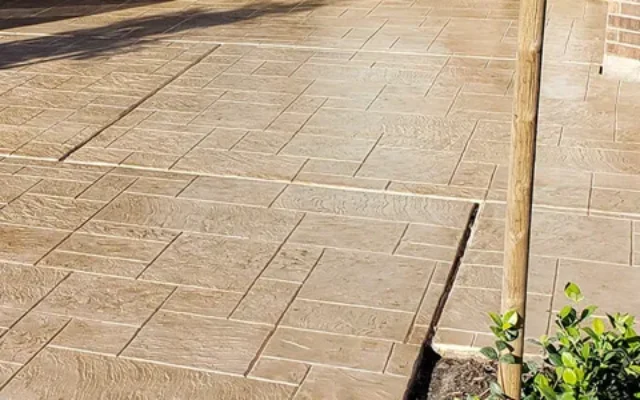
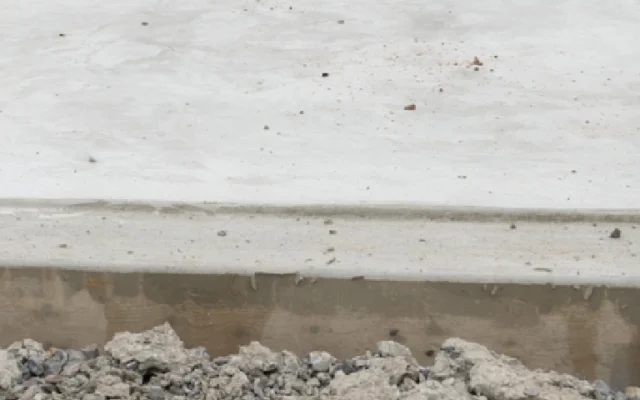
PRIS Concrete Installs Long Lasting Concrete Driveways in Houston
If you live in the Houston area, you already know our weather and soil are rough on concrete. One big storm, a few hot summers, and many driveways start to crack, sink, and hold water.
At PRIS Concrete, we treat every driveway like a small structural job, not a quick patch. Let’s walk through why driveways fail in Houston and how we build them, so they last.
Why So Many Houston Concrete Driveways Fail
Most “cheap” driveway jobs look fine in the first photos. The problems show up later.
Here are the most common reasons driveways around Houston start cracking and sinking:
- Weak or no base
The contractor pours concrete right on clay or soft soil with little prep. - Thin slab
Instead of a true 4-5 inch slab, some jobs end up barely 3 inches in spots. - No reinforcement
No rebar or wire mesh, so the slab cannot handle heavy trucks or soil movement. - Bad drainage
The driveway is not sloped correctly, so water puddles or runs back toward the house or garage. - Poor joints
Control joints are missing, cut too late, or cut in the wrong places, so random cracks form. - Wrong mix or poor finishing
Too much water in the mix, finished too early, or finished while bleed water is on the surface.
In Houston, you cannot get away with cutting corners like that. We have expansive clay soils, heavy rains, and big temperature swings. The ground moves. Water sits. If the driveway is not built for that, it will fail.
How PRIS Concrete Builds Driveways That Last
PRIS Concrete brings a structural mindset to every driveway project. Here is how we do it, step by step.
1. Start With a Real Site Evaluation
We do not just measure and quote.
On the first visit, we look at:
- Existing cracks and dips in your old driveway
- How water flows around your house, garage, and yard
- Trees, roots, and soft spots in the soil
- How many vehicles you park and what kind (cars, trucks, trailers, work vans)
This tells us what thickness, reinforcement, and base prep you really need, not just what looks good on paper.
2. Proper Demo and Base Preparation
A strong driveway starts below the concrete.
We:
- Remove the old driveway and any soft or loose soil
- Check for plumbing, irrigation, and utility lines
- Re-grade the area for proper slope and drainage
- Install and compact a solid base (often crushed concrete or stone)
- Compact the subgrade with the right equipment, not just a quick pass
This step is what many low-cost contractors skip. We do not. A solid base helps keep your driveway from sinking and settling unevenly.
3. Use the Right Thickness and Reinforcement
Most Houston driveways should be:
- 4-5 inches thick for standard vehicles
- Thicker in high-load areas, such as at the street edge or where heavy trucks park
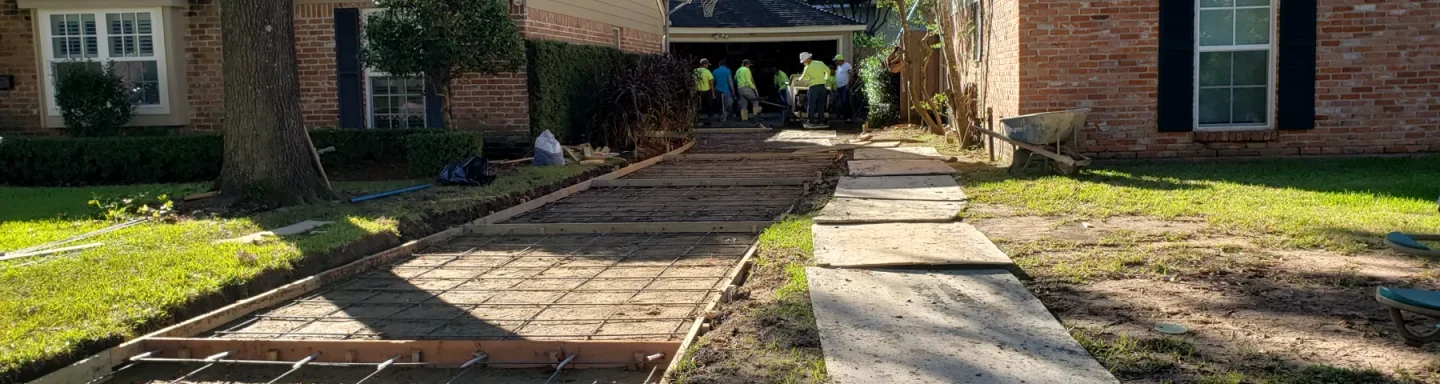
- Installed with rebar in a grid pattern, tied together and properly supported
We also:
- Dowell the new slab into your existing garage slab when needed, so the two sections move together
- Follow or work with engineering when loads or soil conditions call for it
This structural approach helps your driveway resist cracking when the soil moves or when heavy vehicles park in the same spots every day.
4. Choose a Strong Concrete Mix and Correct Placement
We work with mixes designed for Houston conditions. In simple terms, you get:
- Concrete with the right compressive strength for driveways
- Low enough water content to stay strong, but workable for proper finishing
- Additives and mixes suitable for local weather and use
During placement we:
- Pour and spread the concrete evenly across forms
- Use the right tools to vibrate and consolidate the mix
- Avoid adding extra water at the surface to “make it easier” to finish, which weakens the top layer
The goal is a solid, even slab with no hidden weak spots.
5. Joints and Drainage: Where Most Jobs Go Wrong
Even a good slab needs to be controlled.
We:
- Cut control joints at proper spacing and depth so the concrete “chooses” to crack in straight lines, not randomly
- Set the slope so water runs away from your house and does not pond in the middle of the drive
- Pay special attention to transitions at sidewalks, curbs, and the garage so you do not end up with trip hazards
Drainage and joints are small details that make a big difference in how your driveway looks and performs ten years from now.
6. Curing and Aftercare Instructions
Concrete keeps getting stronger after the day it is poured. How it cures matters.
We:
- Use curing methods or compounds to help the concrete gain strength
- Keep you informed about when you can walk and drive on your new driveway
- Offer tips to protect edges and corners during the early days
In general:
- You can walk on your driveway after about 24–48 hours
- We recommend waiting at least 7 days before driving or parking on it
- Heavy trucks and trailers may need even longer wait times
Good curing is one of the easiest ways to add years to the life of your driveway.
Structural Mindset For Residential Work
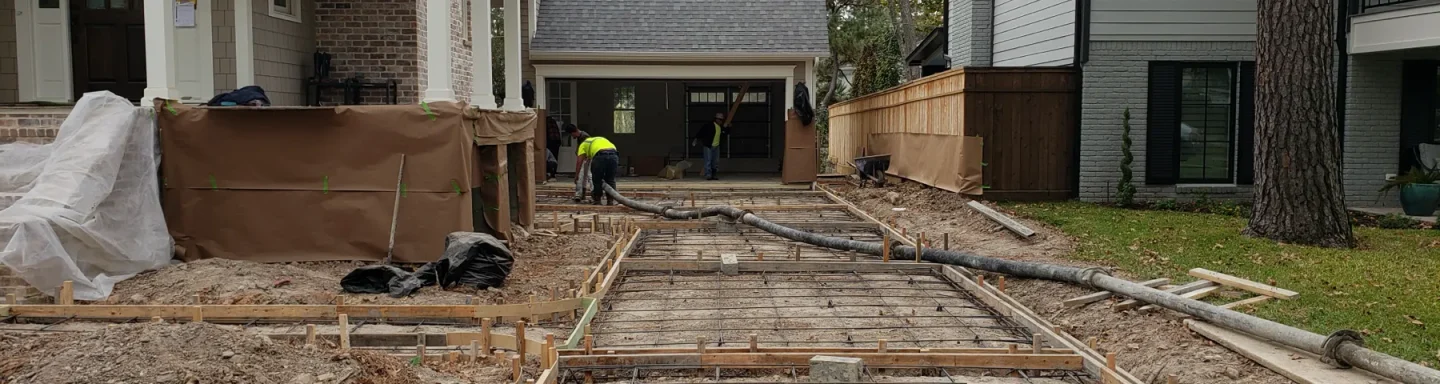
PRIS Concrete does more than simple flatwork. We also handle structural concrete, which means we think beyond the surface.
That benefits your driveway because we:
- Understand loads, soil behavior, and reinforcement
- Know when you really need an engineer involved
- Treat your driveway as part of the overall structure around your home
If you are planning a new driveway as part of a bigger project, such as room additions, garage expansions, or a new slab, that structural background matters.
You can learn more about how we handle residential concrete projects on our residential concrete services page.
Design Options For Your New Concrete Driveway
Function comes first, but looks matter too. Your driveway is a big part of your curb appeal.
PRIS Concrete can install:
- Standard broom finish for great traction and a clean look
- Decorative borders to frame the driveway and tie into walkways or porches
- Colored concrete to complement your brick, siding, or stone
- Stamped concrete sections in the right spots for a high-end look
- Saw-cut patterns that give a modern, custom feel
We can also match your driveway with walkways, patios, and pool decks so everything looks like one complete outdoor design. For example, if you want a new patio or walkway to match your driveway, visit our concrete patios and outdoor spaces page.
Our Process: From First Call To Finished Driveway
Here is what working with PRIS Concrete usually looks like:
- Call or contact us
Tell us what you are dealing with now and what you want from your new driveway. - On-site visit and evaluation
We inspect the existing concrete, check drainage, and measure the project. - Clear written proposal
You get a detailed scope that covers demo, base prep, thickness, reinforcement, and finish options. - Scheduling and prep
We coordinate demolition, forms, and any needed inspections. - Pour day
Our crew arrives on time, handles the pour, and finishes the surface correctly. - Curing and follow-up
We give you clear care instructions and check that everything meets expectations.
The goal is simple: a driveway you are proud of and confident in, without surprises.
Frequently Asked Questions About Concrete Driveways
How thick should my concrete driveway be?
Most Houston driveways should be 4-5 inches thick with rebar reinforcement. Areas that see heavy trucks, trailers, or work vans may need more. We look at your actual use before we recommend a thickness.
How soon can I drive on my new driveway?
You can usually walk on your driveway after 24–48 hours. We suggest waiting at least 7 days before driving or parking on it, and longer for heavy vehicles. Concrete gains strength over time, so patience here pays off.
Do you handle demo and removal of my old driveway?
Yes. PRIS Concrete handles complete demolition and removal of your old driveway. We haul away the debris and prepare the base so the new slab has a solid foundation.
Can I customize the look of my driveway?
Absolutely. We offer:
- Different finishes (broom, trowel, or light decorative)
- Borders, bands, and saw-cut patterns
- Color options to match your home
We will walk you through samples and ideas so your driveway fits your style and budget.
Does Houston weather affect installation?
Yes. Weather matters a lot with concrete. We plan around rain, extreme heat, and cold snaps. Pouring in bad conditions or not protecting the slab properly can lead to surface problems and early cracking. We monitor forecasts closely and will reschedule when needed to protect your project.
How long should a properly built concrete driveway last?
With good design, proper base prep, reinforcement, and curing, a concrete driveway can last 20–30 years or more. Houston soils and weather are tough, but when the job is done right, you should get many years of solid performance. You can read more general information about concrete durability in this concrete overview on Wikipedia.
Takeaway: Houston Concrete Driveways Built To Last
At PRIS Concrete, our goal with Houston concrete driveways is simple: build them like small structural projects so you do not have to replace them every few years.
We:
- Prepare the base the right way
- Use proper thickness and reinforcement
- Design for Houston’s soil and weather
- Pay attention to drainage, joints, and curing
- Offer finish and design options that improve curb appeal
If your current driveway is cracked, sinking, or holding water, or you are planning a remodel that calls for a new layout, PRIS Concrete is ready to help. Reach out today, and let us build a driveway that looks good, drains right, and stands up to real Houston life.